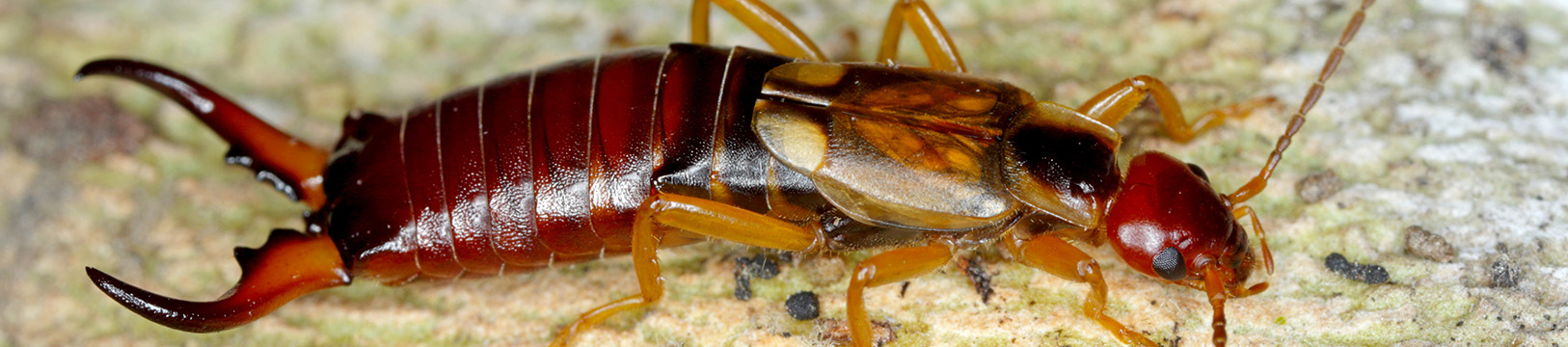
Earwigs are common outdoor insects in Southern California, especially around properties with irrigated landscaping, mulch, groundcover, and other damp hiding places. The European earwig (Forficula auricularia) is the most common earwig found in California landscapes, although other species, including striped earwigs (Labidura riparia), also occur in Southern California.
These pests spend most of the day hidden in cool, protected areas and come out after dark to feed. Although earwigs normally live outdoors, changes in moisture, temperature, and other conditions can send them toward foundations and into garages, bathrooms, laundry rooms, and other parts of the house.
Earwigs can remain active throughout the year in Southern California's mild climate. Activity generally increases in spring as young earwigs emerge, with the greatest activity typically occurring from April through early summer. Hot, dry conditions can reduce surface activity, although earwigs may remain active anywhere moisture and protected harborage are available.
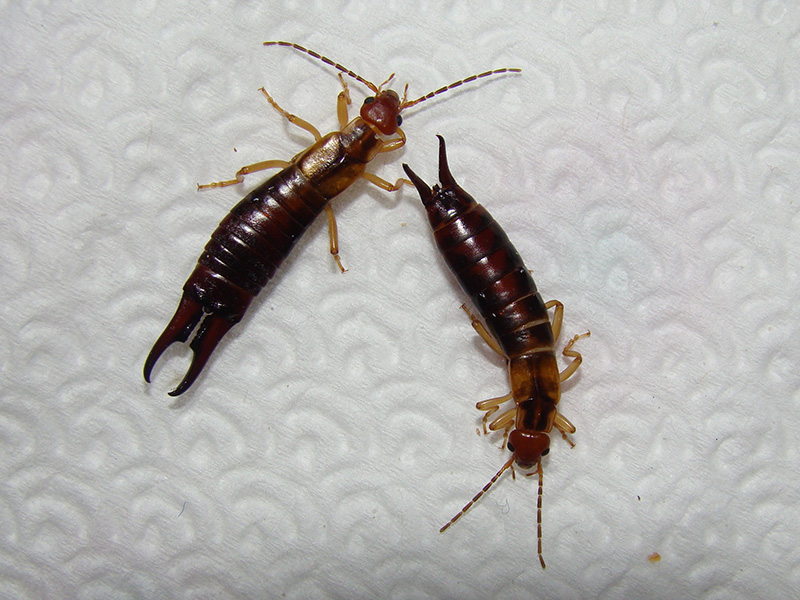
Earwigs are easy to recognize by the prominent pair of pincers at the rear of their bodies.
Key identification features include:
Earwigs often shelter together when they find a cool, damp hiding place. Finding several beneath a planter, a piece of wood, a layer of mulch, or a similar object can point to nearby harborage. A single earwig indoors, however, may simply be a stray that wandered in from outside.
Earwigs need dark, damp, protected places to shelter during the day. Southern California properties can provide plenty of these conditions, particularly around irrigated landscaping.
Common outdoor hiding places include:
Indoors, earwigs may turn up in bathrooms, laundry areas, garages, beneath sinks, or along baseboards near exterior walls. These locations may provide temporary moisture and shelter, but earwigs generally do not develop long-term infestations inside a dry home.
Earwigs usually enter homes when outdoor conditions encourage them to move away from their usual hiding places. Moisture around the structure is one of the most important factors.
Conditions that may contribute to earwig activity include:
Earwigs are nocturnal, so homeowners may see evidence of their activity without seeing the insects feeding.
Common signs include:
Ragged damage to garden plants may point to earwig activity, particularly when earwigs are also found hiding nearby during the day. However, several other garden pests can cause similar damage.
Southern California’s dry climate would normally limit earwig activity, but residential irrigation can create the cool, moist conditions these insects need. Regularly watered planting beds, lawns, and shaded areas can support earwigs even during otherwise dry parts of the year.
Conditions also vary across Admiral Pest Control’s service area. Milder coastal communities may support earwig activity for more of the year, while hotter inland conditions can reduce surface activity during especially warm, dry periods.
Despite their intimidating pincers, earwigs are considered nuisance pests rather than dangerous household pests. They are not venomous and do not sting, although a large earwig may use its pincers defensively if handled.
The old idea that earwigs intentionally crawl into people's ears is a myth. They do not seek out ears or burrow into people.
For more information about insects that can occasionally end up in unusual places, read our article on bugs found in California known to make their way into your ear canal.
Reducing damp hiding places around the exterior can make a property less attractive to earwigs.
Helpful prevention steps include:
These changes can reduce favorable earwig habitat, but established populations may continue to persist in irrigated landscaping and other protected areas around the property.
Admiral Pest Control has been serving Southern California homeowners since 1947, and earwigs are among the common household pests covered by our Home Protection Pest Service.
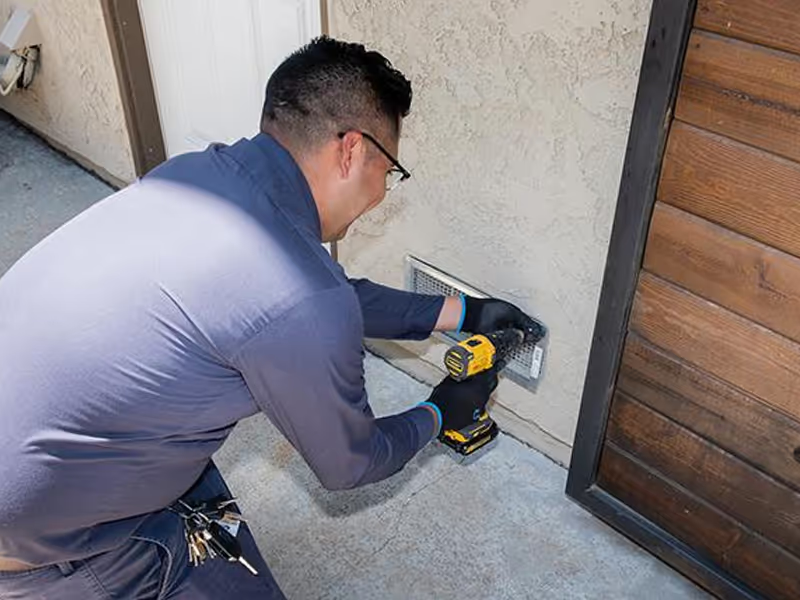
Because most earwig problems begin outdoors, treatment focuses on the areas where these pests are active and the routes they use to enter the structure. Service may include exterior perimeter treatment around the foundation and likely entry points, along with interior treatment when activity is present indoors.
Quarterly service helps maintain protection as pest pressure changes throughout the year. If covered pests return between regularly scheduled visits, Admiral Pest Control provides additional service at no extra charge.
Earwig activity in offices, apartment communities, and other businesses can also be addressed through our commercial pest control services.
Yes. Earwigs may chew ragged holes in seedlings, soft leaves, flower petals, and ripe fruit. They also feed on aphids and other small insects, so the extent of plant damage depends partly on the size of the local population and the availability of food sources.
Earwigs prefer cool, damp environments and may wander into bathrooms through gaps around exterior walls, plumbing penetrations, doors, or other openings. Once one falls into a smooth-sided sink or bathtub, it may have difficulty climbing back out.
It is uncommon. Female earwigs typically create protected nesting chambers in soil outdoors. Earwigs found inside homes are usually wanderers rather than members of an indoor breeding population.
Reducing thick or constantly damp mulch near the foundation can eliminate an important hiding place, but earwigs may also shelter beneath planters, pavers, groundcover, and yard debris, as well as in soil cracks.
Get Help With Earwigs Around Your Home
Admiral Pest Control has served Orange County and Los Angeles County since 1947. Contact Admiral Pest Control or request a free estimate to get started.

I am completely satisfied with the services performed by Admiral Pest Control at my home for over 15 years. The inspection today was completed by Jeffrey; he completed a very thorough job of inspection and was super professional, very friendly and courteous. Highly recommended to anyone that wants termite and pest control services.
Donald T.
Irvine, CA

Aldo came by to service my property. He was polite, professional, and answered my questions regarding getting our property serviced. He was able to sweep potential areas that might have critters and the sprayed repellent for our quarterly treatment. Appreciate his professionalism and representation of this company.
Christian M.
Bellflower, CA

Jeffrey has been amazing!!! Very thorough and kind. We also caught a rat in less than 24 hours, which is a relief! Very grateful!
Hailey S.
Irvine, CA