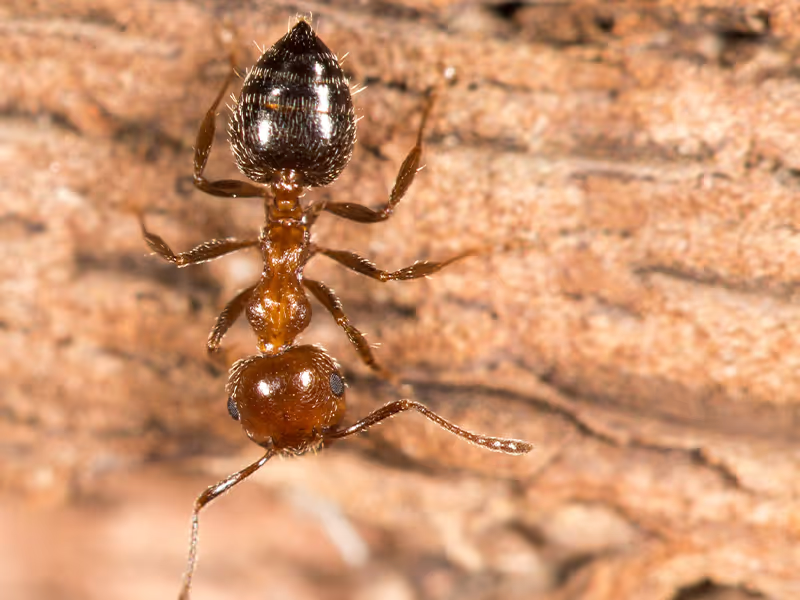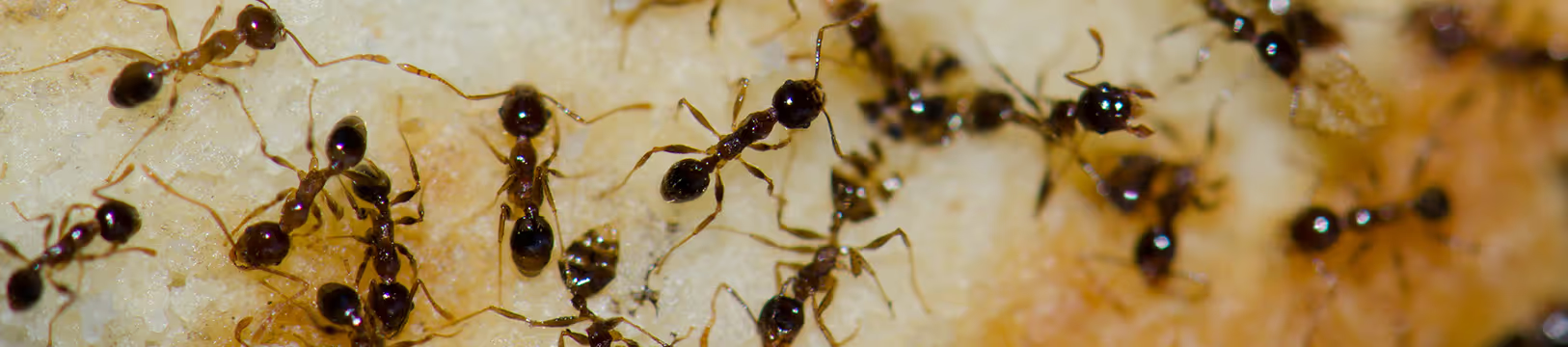
Argentine ants are small brown ants that form large outdoor colonies and commonly enter homes in Southern California in search of food and moisture.
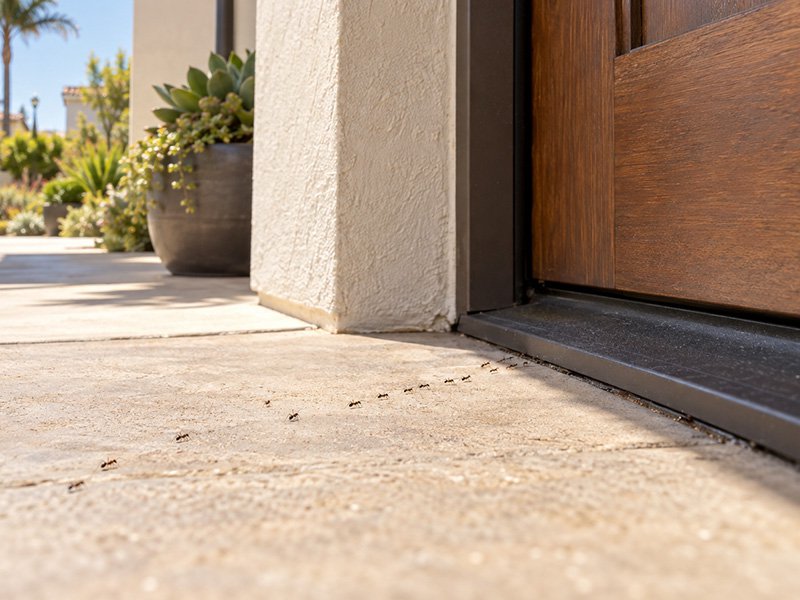
They are known for forming long, steady trails along foundations, patios, and interior surfaces like kitchen counters and bathroom fixtures.
In Southern California, they stay active much of the year. Most colonies are located outdoors, but heat, dry weather, irrigation, or rain can push them indoors in search of more favorable conditions.
Argentine ants are especially difficult to control because of how their colonies are structured. Instead of a single nest, they form large, connected colonies with multiple queens. That allows them to spread, relocate, and reestablish quickly—especially around properties with consistent moisture and landscaping.
.avif)
Argentine ants remain active year-round in Southern California due to the mild climate. Activity increases in spring as colonies expand, then peaks through summer when heat and dry conditions drive ants indoors in search of moisture. While activity slows slightly in fall and winter, it does not stop.
Argentine ants are small and uniform in appearance, so their behavior is often the easiest way to identify them.
Key identification features:
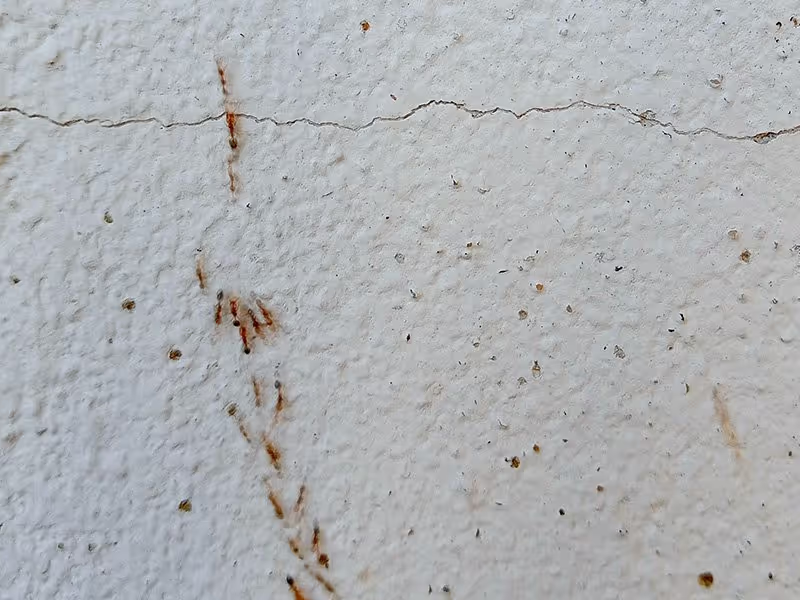
Argentine ants move in long, consistent trails. Unlike some ants that appear sporadically, they tend to show up in large numbers once they’ve established a route.
Argentine ants typically nest outdoors in shallow, protected areas, especially where moisture is present.
Common nesting areas include:
In Southern California, properties with heavy landscaping, frequent watering, or shaded soil tend to support larger populations.
Argentine ants rarely establish primary nests indoors in Southern California. In some cases, they may establish smaller satellite nesting areas indoors, especially in wall voids or consistently damp areas.
Once inside, they follow consistent routes along baseboards, plumbing and utility penetrations, and around window and door frames, often leading toward kitchens and bathrooms where moisture is available.
Argentine ant activity tends to follow predictable patterns tied to environmental conditions.
It’s common to see:
In many cases, the issue isn’t where ants are showing up—it’s what’s supporting them outside the structure.
Argentine ants behave differently from many other ants homeowners are familiar with.
This is why Argentine ants are one of the most persistent ant species found in Southern California homes.
Even small trails can indicate a much larger population nearby.
Argentine ants move indoors when environmental conditions change, such as heat, rain, or irrigation.
Common triggers include:
These triggers explain why Argentine ant activity can appear suddenly or shift locations.
These steps help reduce attraction, but they don’t eliminate established colonies.
Most DIY treatments focus on the ants you can see. The larger issue is usually outside.
Spraying trails may provide temporary relief, but it often doesn’t stop new ants from entering. In some cases, it can cause activity to spread or shift to different areas of the home.
Effective ant control focuses on reducing the source of the activity—not just the visible ants.
If Argentine ants are active in your home, Admiral Pest Control provides residential pest control services designed to address the source of the problem—not just the ants you see.
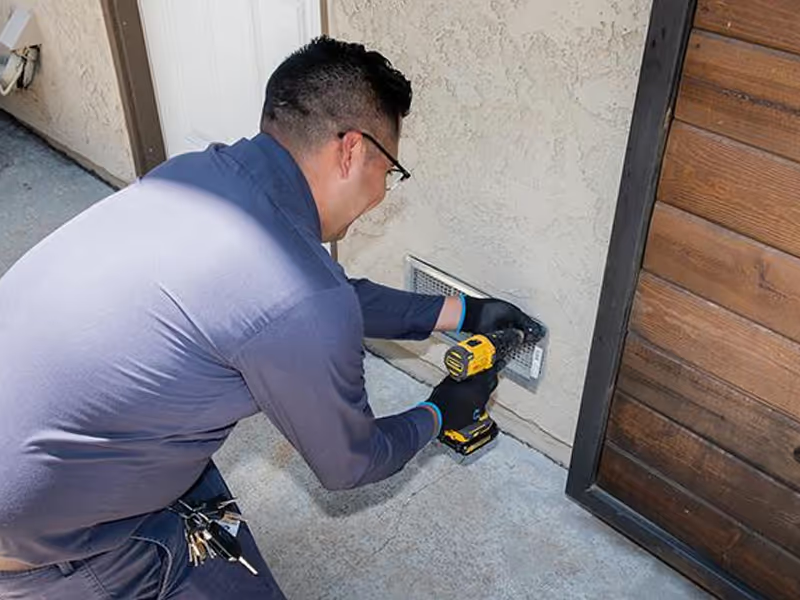
Our approach to Argentine ant control focuses on reducing the outdoor colony pressure that’s driving indoor activity. This includes:
By focusing on how Argentine ants interact with your property, we’re able to deliver more consistent, long-term control instead of temporary relief.
Quarterly service helps maintain that protection over time, and if ants show up between visits, we’ll return to re-treat at no additional charge.
Admiral Pest Control has been helping homeowners in Los Angeles County and Orange County since 1947. Contact us today to schedule an inspection.
Argentine ants are most likely to appear in kitchens and bathrooms, where moisture and food sources are easiest to access.
No. They are not known for stinging and are mainly considered a nuisance pest.
No, Argentine ants don’t damage wood or structures. They’re mainly a nuisance pest, but their presence can become persistent and difficult to manage.
Yes. They’re common in restaurants, offices, and multi-unit properties where food, water, and shared walls create ideal conditions for ongoing activity. Find out more about our commercial pest control services.
It depends on the level of activity and exterior pressure. Ongoing control is often needed to keep activity from returning.

I am completely satisfied with the services performed by Admiral Pest Control at my home for over 15 years. The inspection today was completed by Jeffrey; he completed a very thorough job of inspection and was super professional, very friendly and courteous. Highly recommended to anyone that wants termite and pest control services.
Donald T.
Irvine, CA

Aldo came by to service my property. He was polite, professional, and answered my questions regarding getting our property serviced. He was able to sweep potential areas that might have critters and the sprayed repellent for our quarterly treatment. Appreciate his professionalism and representation of this company.
Christian M.
Bellflower, CA

Jeffrey has been amazing!!! Very thorough and kind. We also caught a rat in less than 24 hours, which is a relief! Very grateful!
Hailey S.
Irvine, CA






Helpful Tips & Info