
Why Ants Thrive in Southern California
Ants do especially well in Southern California because the conditions around most properties support them year-round.
Warm, stable weather keeps colonies active, and even during dry periods, regular irrigation around foundations, planters, and landscaped areas keeps soil consistently damp near structures.
We often find ants nesting close to patios, walkways, and foundations, where conditions stay favorable.
Construction also plays a role. Many homes and commercial buildings are built on slab foundations, with expansion joints, small cracks, and gaps around doors and windows that ants can easily use as entry points.
In older properties, those gaps tend to widen over time. In newer developments, tighter spacing between structures and shared landscaping can make it easier for activity to move from one property to the next.
Location also plays a role. Coastal areas tend to support steady activity due to higher moisture levels, while inland areas often see more ants moving indoors during hotter, drier stretches as they search for water.
Ant activity can also vary depending on the property and surrounding conditions. Learn more about why ants are so common in homes and what attracts them indoors.
Common Ant Species in Los Angeles and Orange Counties
We see a handful of different ant species across Los Angeles County and Orange County.
Argentine Ants
Argentine ants are the most widespread and problematic species in Southern California. They form massive colonies with multiple queens, allowing them to spread rapidly and re-establish even after partial treatment. Learn more about Argentine ants.
Odorous House Ants
Odorous house ants are small ants that often show up indoors after locating a steady food source. They’re especially common in kitchens, where they move along edges of counters, cabinets, and other surfaces as they travel back and forth. These ants are drawn to sugary foods and will continue returning as long as the attraction remains. When crushed, they give off a noticeable odor, which is how they get their name.
Little Black Ants
Little black ants are small and often show up in kitchens, bathrooms, and around entry points. They typically nest outdoors but will come inside in search of food, especially sweets and grease.
Carpenter Ants
Carpenter ants are associated with moisture-damaged or decaying wood, where they excavate galleries to create nesting space. While they don’t eat wood, their activity can contribute to structural damage over time if left unaddressed.
Their presence is often a sign of underlying moisture issues, such as leaks, poor ventilation, or wood in contact with soil, and may indicate conditions that need to be corrected as part of treatment.
If you’re seeing signs of activity, here are five easy ways to spot carpenter ants around your property.
Pharaoh Ants
Pharaoh ants are small, light-colored ants that nest indoors and can spread throughout a structure over time. They are most often found in commercial and multi-unit environments, including offices, apartment buildings, and sensitive settings like hospitals, where they can move through wall voids and shared spaces.
Why Ants Keep Coming Back
In many cases, the ants you’re seeing indoors are traveling from nests outside the structure. They follow scent trails to food and water, which is why you’ll often see the same paths—along counters, around sinks, or near entry points—used again and again.
Most over-the-counter sprays and treatments only kill the ants you can see. They don’t affect the rest of the colony, which may be located outside, under the slab, or inside wall voids. As a result, more ants continue to follow the same scent trails back into the same areas.
We see this a lot when DIY methods are used—activity drops at first, then comes back within a few days.
This is one of the main reasons many homeowners struggle with DIY solutions. If you’ve already tried treating ants yourself, here’s what to know about why DIY ant control often falls short.
In some cases, these treatments can also cause ants to scatter and spread to new areas, creating multiple points of activity instead of just one.
Signs You May Have an Ant Problem
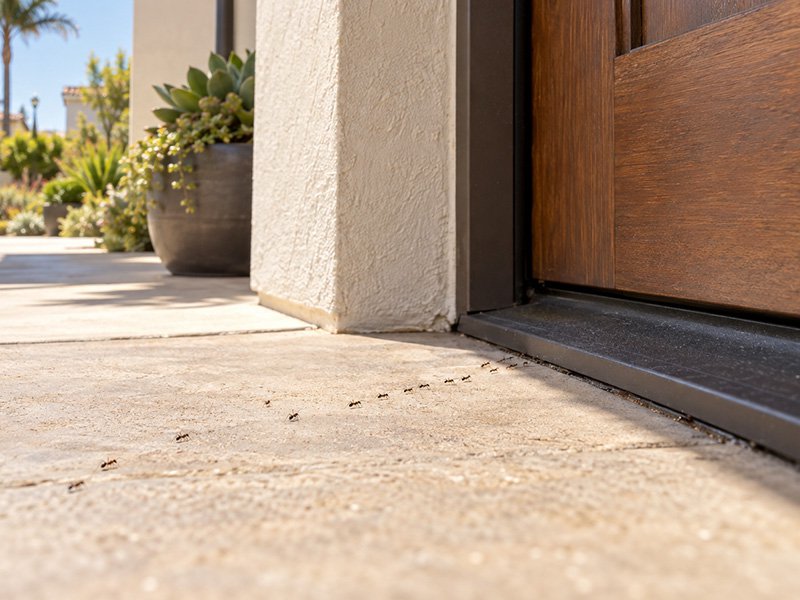
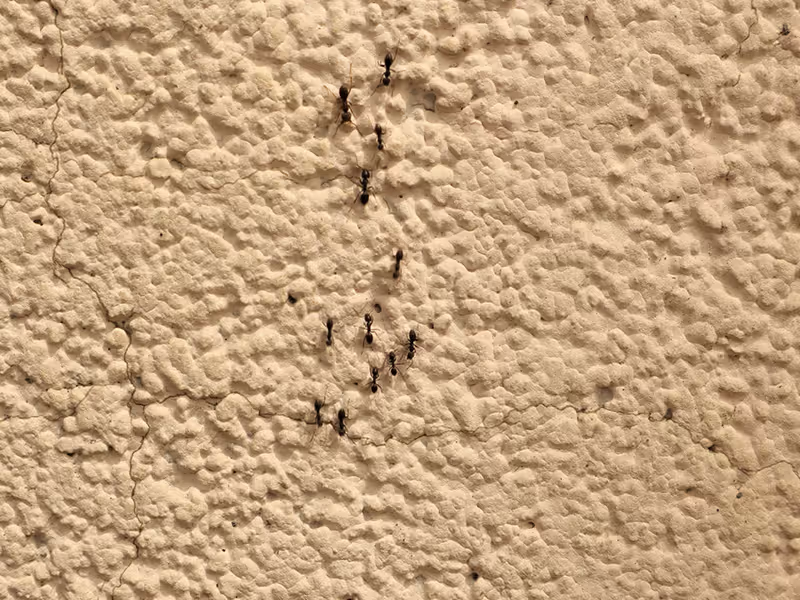
If ants keep showing up in your home or business, there are usually a few clear signs to look for. One of the most obvious is seeing ants move in a steady line, often entering through a crack, gap, or edge of the structure.
You may also notice ants gathering in specific areas rather than wandering randomly. Kitchens, bathrooms, laundry rooms, and breakrooms are common spots, especially around sinks, drains, appliances, or stored food. Garages, utility areas, and loading docks can also see activity, particularly where there’s moisture or easy access from outside.
In some cases, you’ll see ants entering from the same point—under a door, along a window frame, or through small gaps and cracks in the structure.
Outside, activity near the foundation, along walkways, or around landscaped areas can also point to a nearby nest, especially if ants are moving in and out of the same location.
In some cases, ants may look similar but behave very differently. If you’re unsure what you’re seeing, this guide on carpenter ants vs. black ants can help you identify the difference.
Where Ants Typically Nest
Ants usually aren’t nesting where you see them. Instead, they tend to nest in protected locations close to the structure, especially where the ground stays shaded and damp.
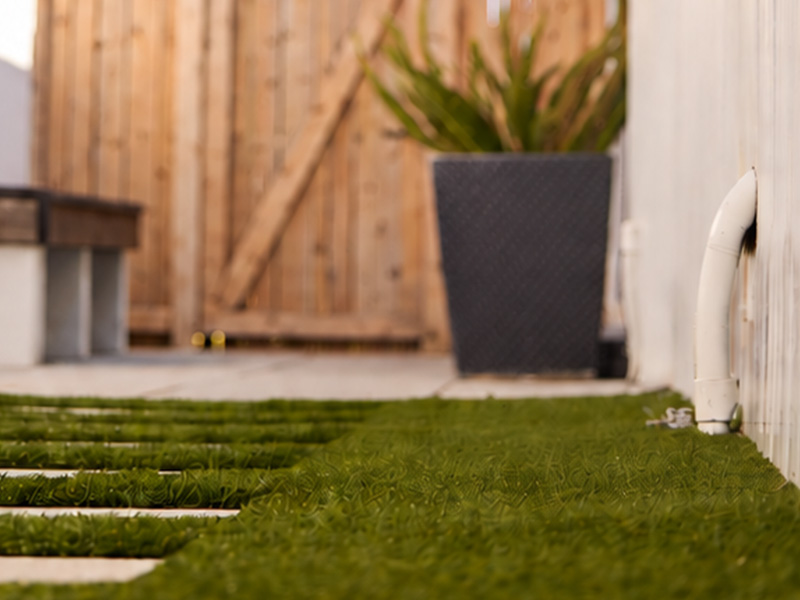
Around most properties, that often means soil right along the foundation, under mulch or decorative rock, and beneath dense shrubs or ground cover like lantana or ice plant that keep the soil cool and undisturbed. Planters and landscaped areas that are regularly watered also tend to support nesting close to the structure.
Nests are also commonly found beneath concrete slabs, patios, and walkways, particularly near expansion joints or cracks where ants can move in and out.
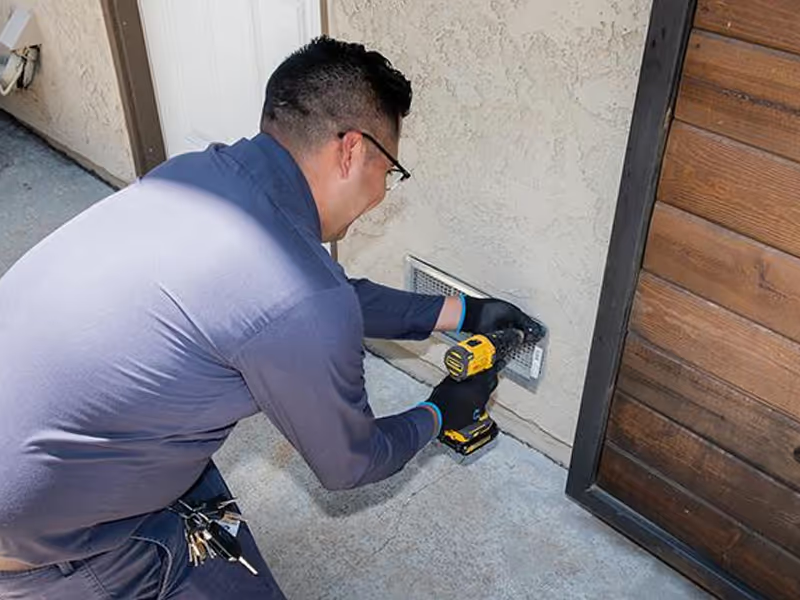
In some cases, ants may also establish themselves within wall voids or other hidden areas of the structure, using small gaps around doors, windows, or utility lines to get inside.
Because of this, the ants you see indoors are often just foraging from a nearby nest rather than living out in the open.
Admiral’s Ant Control Process
With decades of experience treating ants throughout Southern California, we start by figuring out what kind of ants you’re dealing with and where they’re coming from. We’ll locate nesting areas and track how ants are getting in and moving through the property—whether that’s along a foundation, through wall voids, or around entry points like doors and loading areas.
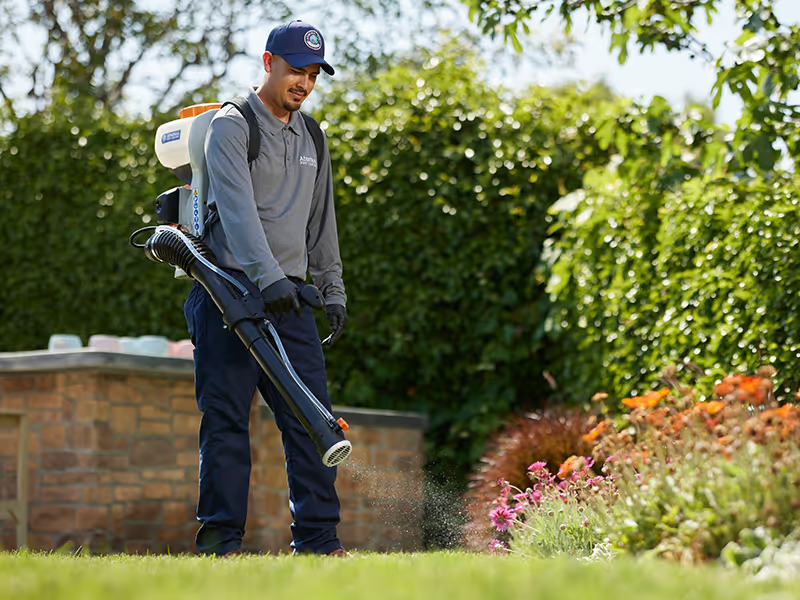
Once we have a clear understanding of the situation, we focus treatment on the source of the problem—not just the ants you see. We use targeted, environmentally responsible treatments, applying products only where needed indoors, while treating the exterior to create a protective barrier that helps keep new ants from coming in.
We also look for the conditions that are allowing ants to persist, including entry points, moisture sources, and landscape or structural factors. On commercial properties, this often means checking areas like breakrooms, storage spaces, and loading zones where food, water, or deliveries create easy access for ants.
Follow-up visits and monitoring are used to make sure the activity is fully resolved and doesn’t return, with adjustments made as needed based on how the property is used.
Residential Pest Control That Covers Ants and More
For many homes in Southern California, ant problems aren’t just a one-time issue. Admiral’s residential pest control plans include ants along with other common household pests like cockroaches, spiders, and earwigs.
With regularly scheduled treatments throughout the year, plus no-charge service visits between scheduled visits if needed, our plans are built to help homeowners stay ahead of ant activity instead of reacting to each new trail or flare-up. That way, you’re not dealing with the same problem over and over again.
Each service includes exterior perimeter treatments, with interior treatments as needed.
Frequently Asked Questions About Ant Control
Can ants damage my home?
Most ants are more of a nuisance than a structural threat, but some species—like carpenter ants—can be associated with moisture-damaged wood. Even when damage isn’t a concern, large or persistent infestations can become difficult to manage without treatment.
Are your ant treatments safe for pets and children?
Treatments are applied with safety in mind and according to label guidelines. As a long-standing member of the Pest Control Operators of California (PCOC), Admiral Pest follows industry standards for safe and effective application.
How much does ant control cost?
The cost of ant control can vary depending on the size of the property, the level of activity, and the type of service needed. Admiral’s residential pest control plans start at $39/month and include ant control. Because every property is different, a free estimate is the best way to get accurate pricing for your home or business.
Get Ants Under Control
Whether you’re dealing with active ant problems or looking to keep them from coming back, Admiral Pest provides ant control for homes and businesses throughout Los Angeles County and Orange County.
Same-day service is often available, depending on scheduling.