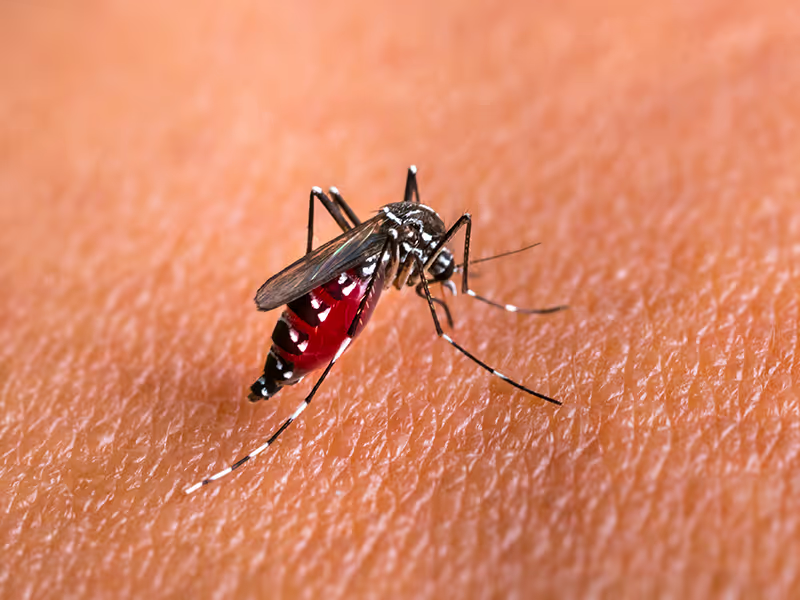
We're seeing mosquito inquiries up 220% across Southern California over the past two weeks, led by Bellflower, as warmer, wetter fall conditions support breeding in standing water. Around homes, water left in containers and poorly draining spots gives mosquitoes places to develop, so checking those areas is a useful first step; occasional invaders, ants and cockroaches are also drawing more attention.
We're seeing increased mosquito concerns in Southern California, led by Bellflower, over the past two weeks. A warmer, wetter fall stretch supports mosquito development and leaves more opportunities for standing water around homes. Containers and poorly draining yard areas are useful places to start looking for breeding sources.
Watch for mosquitoes repeatedly gathering around outdoor sitting areas and small, wriggling larvae in standing water. Check plant saucers, buckets, outdoor toys and folds in stored tarps. Even a small container deserves attention when it holds water rather than draining or drying out.
Empty and scrub water-holding containers regularly. Store unused buckets and toys upside down or under cover. Clear leaves and debris from gutters so water can drain, and repair damaged window and door screens to help keep adult mosquitoes outside your home.
We're also seeing more interest in occasional invaders, ants and cockroaches across Southern California. Alongside mosquito prevention, checking door gaps, keeping food sealed and addressing indoor leaks are practical ways to make homes less accessible and appealing to these pests.
If mosquitoes keep interrupting time outdoors after you've removed standing water, or you cannot locate the source, Admiral Pest Control can help assess the property. Learn about our mosquito control service and discuss the next steps for your home.
Source: Admiral Pest Control service calls and customer inquiries, Sep 28–Oct 11, 2026.
Mosquitoes are one of the most frustrating outdoor pests in Southern California.
Whether you're trying to enjoy an evening on the patio, relax by the pool, or spend time outside with family, mosquito activity can quickly make outdoor spaces uncomfortable. In Orange County and Los Angeles County, mosquitoes can remain active for much of the year thanks to our mild climate, irrigated landscapes, and abundance of places where water collects.
At Admiral Pest Control, we've been helping homeowners across Southern California deal with mosquito problems since 1947. Understanding where mosquitoes breed, what species are common locally, and why activity increases around certain properties can help you recognize when a small nuisance is becoming a larger problem.
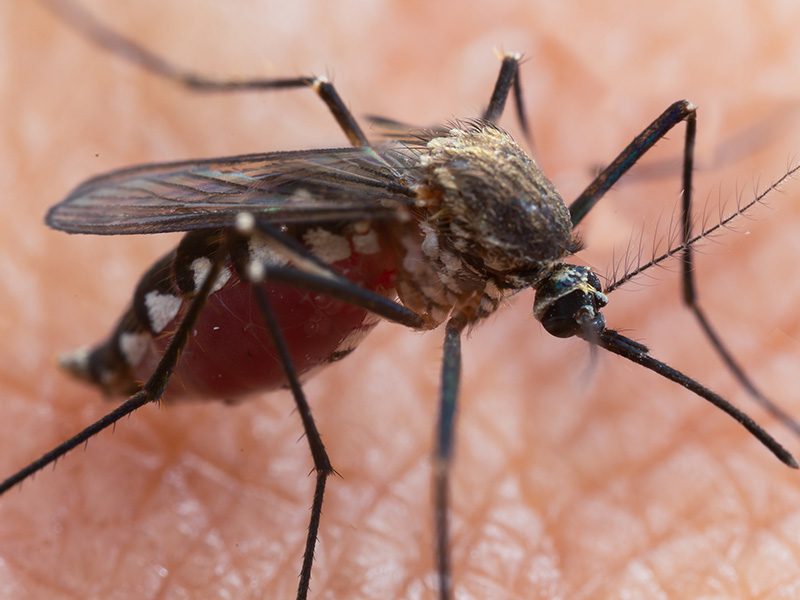
Mosquito activity in Southern California typically increases in late spring as temperatures rise and peaks through summer and early fall. While activity slows during cooler months, it rarely stops entirely. Mild winters in Los Angeles and Orange counties allow some species to remain active in sheltered, irrigated areas year-round, and breeding can resume quickly when conditions become favorable.
Many people associate mosquitoes with humid climates and frequent rainfall, but Southern California provides plenty of conditions that allow mosquito populations to thrive.
Irrigation systems, ornamental landscaping, backyard water features, swimming pools, and even small containers that collect water can provide breeding opportunities. Because our winters are relatively mild, mosquito activity often returns quickly after brief slowdowns during cooler months.
Over the years, we've also seen invasive Aedes mosquitoes become increasingly common throughout Southern California neighborhoods. Unlike many native species, these mosquitoes bite aggressively during the day and can breed in surprisingly small amounts of water around residential properties.
Mosquitoes are small flying insects with narrow bodies, long legs, and a distinct proboscis (needle-like mouthpart) used for feeding. While there are multiple species found in Southern California, most share common characteristics that make them easy to recognize.
Key identification features
Mosquitoes are most often noticed at dawn and dusk when they are actively seeking hosts, though some species—particularly invasive ones—will bite during the day.
Culex mosquitoes are the most common native mosquitoes in Southern California. They breed in standing water sources such as storm drains, neglected pools, birdbaths, and clogged gutters. They are most active around dawn and dusk and are the primary carriers of West Nile virus in the region.
Aedes aegypti and Aedes albopictus are invasive mosquito species that have become established in parts of Southern California.
Unlike many native mosquitoes, Aedes mosquitoes bite aggressively during the day and can breed in extremely small amounts of water, sometimes as little as a bottle cap's worth. They tend to stay close to where they breed, making residential properties a common source of activity. Their ability to thrive around homes has made them an increasingly common nuisance throughout Southern California.
Mosquitoes require standing water to complete their life cycle. Females lay eggs on or near the water surface, and larvae develop in the water before emerging as adults.
In Southern California, breeding sites are often overlooked because they don't require large bodies of water.
Common breeding sites include:
One challenge is that many mosquito breeding sites are easy to overlook. During inspections, we often find mosquito activity linked to irrigation components, drainage areas, neglected containers, or areas that hold water that homeowners didn't realize were present. In some cases, the source may even be coming from a neighboring property.
In coastal communities like Huntington Beach and Seal Beach, higher humidity and proximity to marshland can support larger mosquito populations. Inland communities such as Irvine, Mission Viejo, and Cerritos can also experience significant mosquito activity due to irrigation and landscaped environments.
Mosquitoes are more than just an outdoor nuisance.
In Los Angeles and Orange counties, mosquitoes—particularly Culex species—are known carriers of West Nile virus. While many people experience mild symptoms or no symptoms at all, some individuals can develop more serious illness, especially older adults and those with weakened immune systems.
Invasive Aedes mosquitoes have also become established in parts of Southern California. These mosquitoes are capable of transmitting diseases such as dengue, Zika, and chikungunya. While locally acquired dengue cases have been reported in California, local transmission of Zika and chikungunya has not occurred. Public health agencies continue to monitor these mosquitoes because of their ability to spread disease under certain circumstances.
Beyond disease concerns, mosquito bites can cause discomfort, allergic reactions, and make outdoor spaces difficult to enjoy. For many homeowners, the constant biting activity is the most noticeable impact of a mosquito problem.
Some properties seem to attract mosquitoes year-round. In most cases, one or more of these factors are contributing to the problem:
In many situations, the source of mosquito activity isn't limited to a single property. Neighboring yards with neglected pools, accumulated debris, standing water, or overgrown vegetation can contribute to local mosquito populations.
Eliminating potential mosquito breeding sites on your property is an important first step in lowering populations.
Helpful mosquito prevention tips include:
These steps can reduce favorable conditions, but they will not completely stop mosquito activity—especially when neighboring properties or nearby public areas are contributing to the population.
Store-bought mosquito sprays, citronella candles, bug zappers, and other DIY products may provide temporary relief, but they rarely deliver long-term results.
Most do not address breeding sites or the shaded areas where adult mosquitoes spend much of the day resting.
Mosquitoes reproduce quickly, and new adults can emerge continuously as long as breeding sources remain nearby. Even if activity improves briefly, populations often rebound within days or weeks.
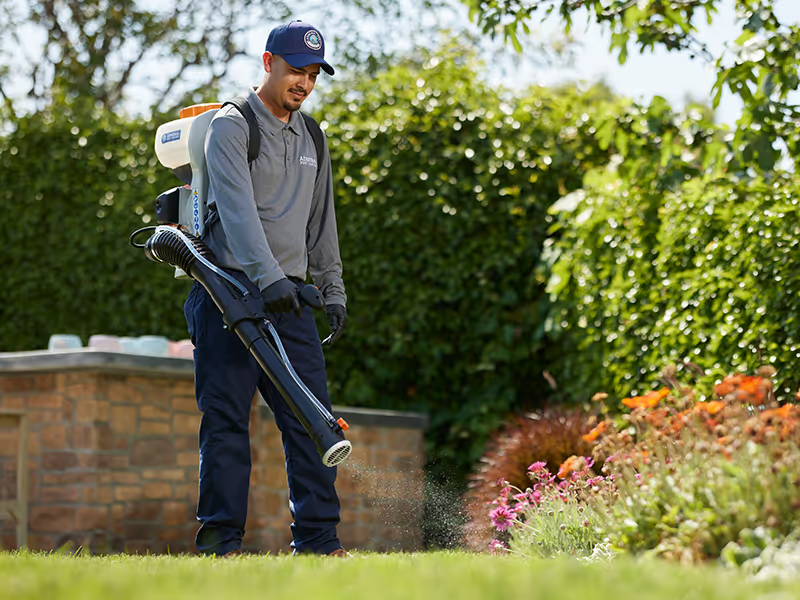
Professional mosquito control focuses on reducing both adult and developing mosquito populations through targeted treatments that address the areas where mosquitoes actually live and breed.
If mosquitoes are making it difficult to enjoy your yard, patio, pool area, or outdoor living spaces, professional treatment can make a significant difference.
Admiral Pest Control has been helping Southern California homeowners reduce mosquito activity for decades, using treatment strategies designed specifically for conditions found throughout Orange and Los Angeles counties.
Our mosquito control includes:
Mosquito control is also included in our Ultimate Pest & Mosquito Service, which also covers more than 21 common household pests.
One-time mosquito treatments are also available for special events and gatherings.
Native Culex mosquitoes can travel a mile or more from where they develop, while invasive Aedes mosquitoes usually remain within a few hundred feet of their breeding site. This is one reason why some mosquito problems originate directly on the property, while others may be influenced by nearby neighborhoods, drainage systems, or unmanaged water sources.
A properly chlorinated and circulated pool is not a breeding risk. However, neglected pools, pool covers that collect water, and equipment that holds standing water can all support mosquito development.
Absolutely. Mosquitoes don't stay in one yard. Nearby properties with standing water, neglected pools, clogged drains, or dense vegetation can contribute to mosquito activity around your home.
Mosquitoes spend much of the day resting in cool, protected locations. Dense shrubs, ground cover, trees, and heavily landscaped areas provide shelter from heat and sunlight, which is why mosquito activity often seems concentrated around shaded portions of the yard.
Mosquito populations can grow quickly. Under the right conditions, mosquitoes can go from egg to biting adult in as little as seven to ten days.
Mosquitoes don't have to take over your outdoor spaces.
Admiral Pest Control has been helping homeowners and businesses throughout Orange County and Los Angeles County since 1947. Whether you're dealing with occasional mosquito activity or persistent biting around your property, our team can identify the source of the problem and provide regular mosquito treatments that deliver lasting relief.
Contact us today for a free estimate and learn how our mosquito control program can help you enjoy your yard again.
Warmer, drier conditions mean Southern California homeowners should still check for mosquito breeding water this fall. Warmth can speed mosquito development wherever water remains, even with little rain. We're seeing mosquito inquiries rise over the past two weeks, led by Lakewood, with Manhattan Beach, Bellflower, Long Beach and Los Alamitos also among the leading towns.
Look for standing water in plant saucers, uncovered buckets and places where drainage has slowed. Small wriggling larvae in water can signal a mosquito breeding source. Repeated mosquito activity around a patio is also a reason to inspect nearby containers rather than waiting for rain to prompt a yard check.
Empty containers that hold water, and store unused buckets upside down. Clear debris that blocks drainage so water can move freely. Check outdoor water sources regularly, including after watering plants, because dry weather does not eliminate water collected around a home.
We're also seeing more activity in inquiries about ants, spiders and rodents. Include checks for ant trails, webs and possible entry gaps in your regular home maintenance routine.
If mosquitoes keep interrupting time outdoors after you've addressed standing water, Admiral Pest Control can help assess the next steps. Learn about our mosquito control service for help identifying breeding sources and managing activity around your home.

I am completely satisfied with the services performed by Admiral Pest Control at my home for over 15 years. The inspection today was completed by Jeffrey; he completed a very thorough job of inspection and was super professional, very friendly and courteous. Highly recommended to anyone that wants termite and pest control services.
Donald T.
Irvine, CA

Aldo came by to service my property. He was polite, professional, and answered my questions regarding getting our property serviced. He was able to sweep potential areas that might have critters and the sprayed repellent for our quarterly treatment. Appreciate his professionalism and representation of this company.
Christian M.
Bellflower, CA

Jeffrey has been amazing!!! Very thorough and kind. We also caught a rat in less than 24 hours, which is a relief! Very grateful!
Hailey S.
Irvine, CA






Helpful Tips & Info