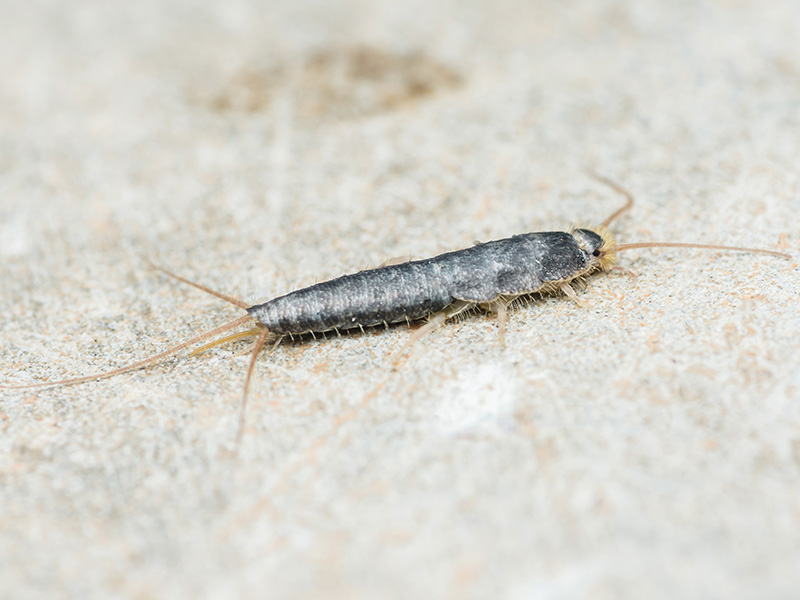
Silverfish have a distinctive appearance, although their small size and quick movements can make them difficult to examine.
Key identification features include:
Young silverfish are smaller and initially pale or whitish. As they develop, they acquire the scales that give older silverfish their characteristic appearance.
Silverfish continue molting even after reaching adulthood, something relatively unusual among insects.
Silverfish remain active throughout the year in Southern California homes, with no clearly defined seasonal peak. Because they spend most of their time indoors, their activity depends more on moisture, temperature, and available hiding places than on the season. Bathrooms, laundry rooms, closets, and storage areas can provide favorable conditions even during cooler months. Warmer weather may encourage activity in certain locations, but homeowners can encounter silverfish at any time of year.
Silverfish are sometimes confused with other small insects found in bathrooms, kitchens, and storage areas.
One of their closest look-alikes is the firebrat, another wingless insect with long antennae and three tail filaments. The easiest differences to recognize are their coloring and preferred surroundings. Whereas silverfish are typically shiny silver or pearl-gray and most commonly associated with humid, sheltered areas, firebrats are usually mottled gray or brown and more likely to inhabit unusually warm locations, such as areas near heating equipment, ovens, or hot water pipes.
Earwigs are another occasional source of confusion, but their prominent rear pincers distinguish them from silverfish's three fine tail filaments.
Silverfish spend much of their lives out of sight. Their flattened bodies allow them to shelter in narrow spaces, often close to sources of moisture or food.
Common hiding places include:
Homeowners sometimes find silverfish trapped in sinks or bathtubs. That doesn't necessarily mean they entered through a drain. They may simply have wandered onto a smooth surface they cannot climb back out of.
Silverfish can enter buildings through small openings or arrive unnoticed in boxes, building materials, and stored belongings. Once inside, they may find everything they need to survive.
Three conditions are particularly important:
Although Southern California is known for relatively dry weather, indoor moisture conditions can be very different from those outdoors. A damp laundry area or crowded storage closet can provide favorable silverfish habitat regardless of the surrounding neighborhood.
Because silverfish are most active after dark, homeowners may notice evidence of their feeding before discovering the insects themselves.
Possible signs include:
Silverfish have relatively weak jaws and generally scrape or graze surfaces rather than taking large bites. Damage may start as roughened patches before developing into irregular holes.
These signs aren't exclusive to silverfish, however. Identifying the responsible insect is important before determining which treatment is appropriate.
Silverfish are primarily nuisance and material-damaging pests rather than a direct health threat.
They do not transmit diseases to people and do not bite or sting.
Their feeding habits are what make them troublesome, particularly when they have access to valuable or long-stored belongings.
Silverfish may damage:
A single silverfish is unlikely to cause significant harm, but a population that remains undetected among stored belongings can cause noticeable damage over time.
Silverfish prefer damp, sheltered spaces where they can find food and remain undisturbed. To make your home less inviting, address plumbing leaks, improve ventilation in bathrooms and laundry rooms, and store paper products, clothing, and other belongings in sealed containers.
These steps can help discourage silverfish, but they won't necessarily eliminate an established infestation. Silverfish can remain hidden in cracks and other concealed spaces, where household prevention measures may not reach them.
If you're finding silverfish in your home, Admiral Pest Control can help. Silverfish are covered under all three of our residential pest control plans.
When you sign up, we'll inspect your home and address existing silverfish activity along with other covered pest problems we discover. From there, we'll return regularly to treat your home's exterior and provide additional services based on the plan you choose.
It's a straightforward way to address your current pest problem while keeping your home protected year-round.
Yes. Silverfish can move between rooms through small openings around baseboards, walls, and plumbing. They may turn up in different areas of your home as they search for food, moisture, and places to hide.
Yes. Female silverfish lay tiny eggs in protected areas such as cracks, crevices, and other concealed spaces. Once the eggs hatch, young silverfish can develop indoors, allowing an infestation to grow even when homeowners only occasionally see the insects.
Yes. Newly constructed homes can sometimes have favorable conditions for silverfish, particularly when building materials retain moisture. Silverfish may also be introduced with lumber, wallboard, boxes, or other materials brought into the home.
You don't have to put up with silverfish in your home. Locally owned and family-operated, Admiral Pest Control has been helping homeowners across Orange and Los Angeles counties tackle unwanted pests since 1947, and we're ready to help you, too.
With professional treatment and ongoing pest protection, you can leave the silverfish problem to us.
Contact Admiral Pest Control today for a free estimate and get started.

I am completely satisfied with the services performed by Admiral Pest Control at my home for over 15 years. The inspection today was completed by Jeffrey; he completed a very thorough job of inspection and was super professional, very friendly and courteous. Highly recommended to anyone that wants termite and pest control services.
Donald T.
Irvine, CA

Aldo came by to service my property. He was polite, professional, and answered my questions regarding getting our property serviced. He was able to sweep potential areas that might have critters and the sprayed repellent for our quarterly treatment. Appreciate his professionalism and representation of this company.
Christian M.
Bellflower, CA

Jeffrey has been amazing!!! Very thorough and kind. We also caught a rat in less than 24 hours, which is a relief! Very grateful!
Hailey S.
Irvine, CA






Helpful Tips & Info