
Where Mice Usually Get Into a House
The exact entry point varies from house to house. Mice take advantage of any small openings a structure offers.
Common mouse entry points include:
- Gaps beneath garage doors and exterior doors
- Openings around pipes, cables, and utility lines
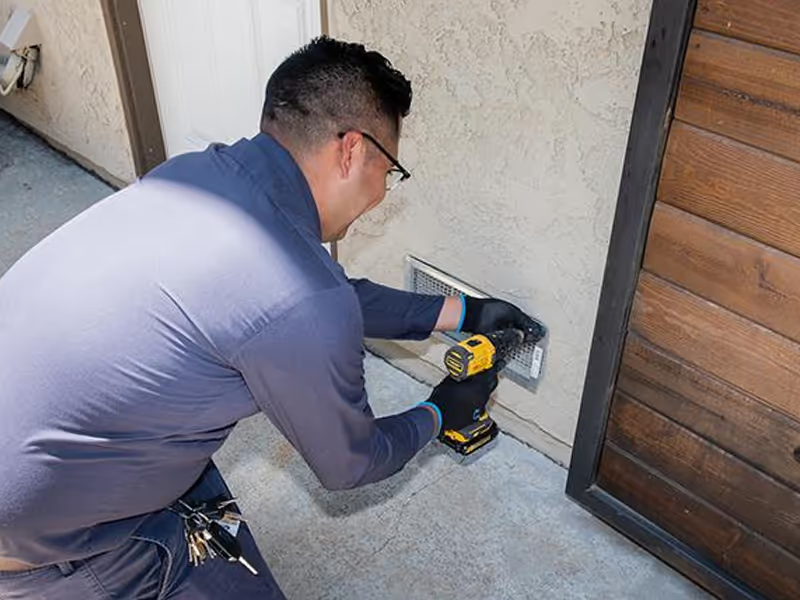
- Damaged or poorly fitted screens and vents
- Cracks and gaps along exterior walls or the foundation
- Openings around eaves, rooflines, and attic vents
- Gaps where different building materials meet
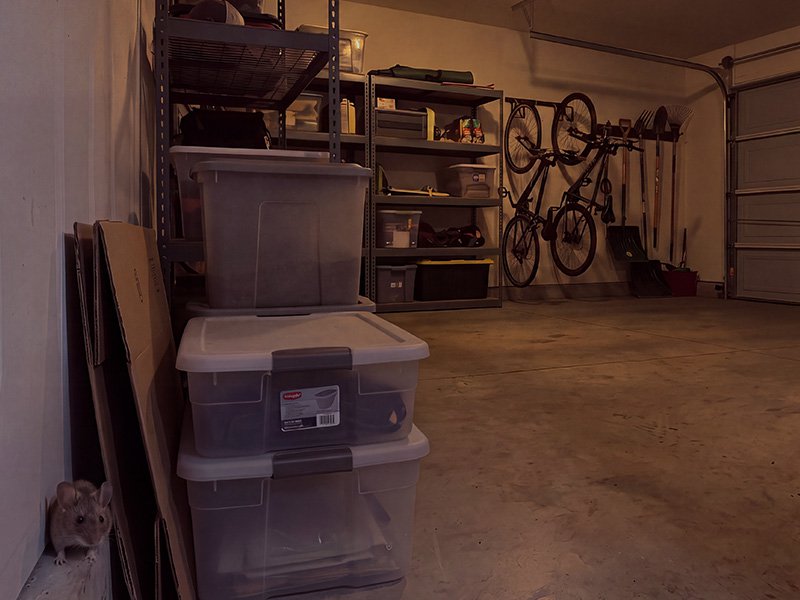
Garages deserve particular attention. The garage door is an obvious possibility, but side doors, utility penetrations, and other gaps around the structure can also provide ways in.
And the place where you see a mouse isn’t necessarily where it entered. Once inside, mice can move through wall voids and other concealed areas of the structure.
How to Find Where Mice Are Getting Into Your House
A mouse sighting tells you where the mouse showed up. It doesn’t necessarily tell you where it got into the house.
Activity inside can provide clues. A mouse appearing near kitchen cabinets, for example, may have traveled through a wall or cabinet void before becoming visible. Scratching near the ceiling could point to activity higher in the structure.
But because mice need so little space to get inside, the actual opening can be easy to miss. A professional rodent inspection looks at both the activity inside and the exterior of the home to determine how mice may be moving through the structure and where they may be getting in.
Why Mouse Activity Can Become More Noticeable in the Cooler Months
Mice can be a problem at any time of year in Orange County and southern Los Angeles County. Our mild climate doesn’t create the same sharp seasonal change homeowners experience in colder parts of the country.
Even so, outdoor house mice often move into buildings as nighttime temperatures cool. Changes in rain, available food, landscaping, vegetation, or nearby construction can also affect where rodents travel and find shelter.
Sometimes the explanation is even simpler: an opening was already there.
A worn door seal, a gap around a utility line, or an opening near the roof may have gone unnoticed for months before a mouse found it. That’s why a sudden sighting doesn’t necessarily mean something suddenly changed with the house.
And warmer weather doesn’t rule out an indoor problem. As we’ve covered before, there are several reasons mice can come inside during the summer, too.
Catching a Mouse Doesn’t Close the Entry Point
If you see a mouse, setting a trap may seem like the obvious solution. A properly placed trap can catch an individual mouse, but it can’t tell you whether another mouse is present or how the first one got inside.
That distinction matters.
This is one reason homeowners sometimes catch a mouse, stop seeing activity for a while, and then notice new signs. The one mouse was eliminated, but whatever opening it used to get into the house may still be there, allowing others to enter.
If that sounds familiar, we’ve also explained why DIY mouse traps may not solve the entire problem.
Addressing the mice already inside and closing off potential entry points work well together. One deals with the current activity; the other helps prevent new activity from taking its place.
What If Mice Are Already Inside?
Once mice are active inside, the mice already in the home need to be addressed, along with the conditions that allowed them to get there.
Admiral Pest Control’s rodent control services begin with a free rodent inspection to determine where activity is occurring and how rodents may be getting into the structure.
From there, the recommended service depends on what is found. Admiral’s customized rodent control solutions may include interior trapping, exterior baiting, exclusion, sanitation, and, when needed, removal and replacement of contaminated insulation.
The goal isn’t simply to catch the mouse you happened to see. It’s to understand the extent of the activity and determine what needs to be done to address the problem.
How Exclusion Helps Keep More Mice Out
If the inspection identifies openings that should be sealed, Admiral may recommend exclusion as part of our rodent control service.
Exclusion closes off access points using materials appropriate for the location. It isn’t the entire rodent control strategy, but when structural openings are contributing to the problem, sealing them can help prevent additional mice from getting inside.
Ongoing Pest and Rodent Protection From Admiral
If you want the current mouse problem handled without going right back to square one later, Admiral’s Home Protection Pest & Rodent Service gives you ongoing pest and rodent protection after the initial issue is addressed.
Our residential pest control plan addresses the existing rodent problem and then provides ongoing protection against mice, rats, and more than 20 common household pests. That means you’re not signing up for rodent control alone—you’re getting year-round pest control along with exterior rodent control and interior trapping for rats and mice when needed.
Get Help With Mice in Orange County and Southern Los Angeles County
Admiral Pest Control has served Orange County and southern Los Angeles County since 1947, including Rancho Palos Verdes, Long Beach, Huntington Beach, and surrounding communities.
If you’re hearing mice, finding signs of activity, or can’t figure out how they’re getting into your home, request a free rodent inspection or call (866) 610-7999 to get started.
Originally published May 28, 2025. Updated October 2, 2026, with expanded information on how mice enter homes, rodent exclusion, and Admiral’s rodent control services.