

It Doesn't Take Much for Ants to Find a Way In
Most of the ants we deal with across Los Angeles County and Orange County — especially Argentine ants — are tiny. A crack the width of a credit card is often more than enough room.
That's why we tell homeowners that if there's a gap, ants will eventually find it. They're constantly scouting for food and water.
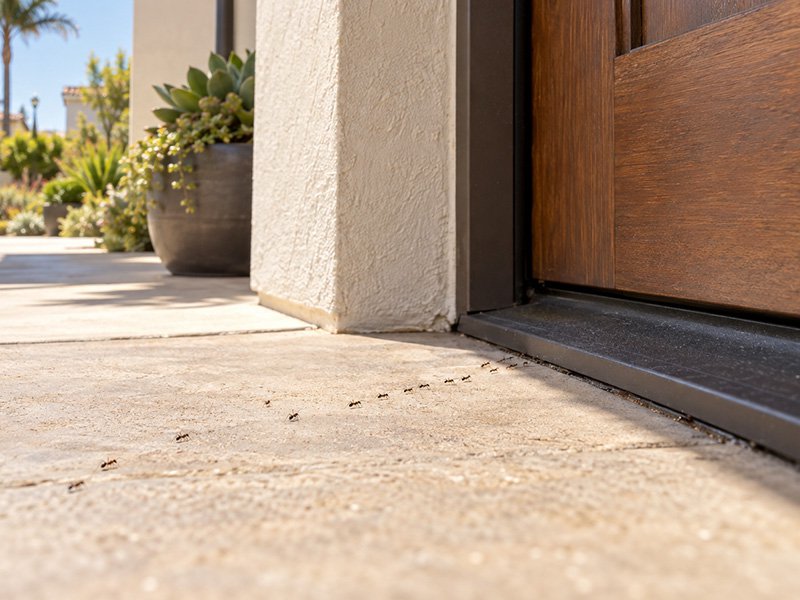
Once a single ant discovers a reliable source indoors, it leaves behind a scent trail for the rest of the colony to follow. Within hours, one scout can turn into a steady ant trail moving through the exact same opening.
If you're noticing ants in the same spot again and again, there's usually a nearby entry point that's been active for a while. We can usually track down those access points pretty quickly because the same problem areas keep showing up in Southern California homes.
Where Do Ants Enter Homes in Southern California?
After decades of treating homes throughout Southern California, we've gotten pretty good at tracking down exactly where ants are getting in. Here are the spots we check first during every inspection.
Foundation Cracks and Expansion Joints
Most homes in Southern California sit on concrete slab foundations. Over time, those slabs develop small cracks — especially near expansion joints, where the concrete was designed to shift slightly. Ants love these gaps. We regularly find ant trails running right through hairline fractures in the foundation, particularly along the garage floor and where the slab meets exterior walls.
In older neighborhoods, such as Lakewood and Artesia, decades of settling mean more cracks and wider gaps around those joints. Even homes in good condition often have openings along the foundation that are invisible from inside but wide open to ants at ground level.
Where Stucco Meets the Foundation
This is one of the most common ant entry points we find in Southern California homes, and most homeowners never notice it.
In stucco construction, there's typically a small gap where the stucco wall system meets the concrete foundation. Builders install a metal strip called a weep screed in this area to help moisture drain properly. The problem is that ants use that same opening to move behind the stucco and into wall voids.
We see this constantly in coastal communities throughout Orange County and south Los Angeles County. Ants travel along the soil line, move into the weep screed opening, and eventually show up indoors around baseboards, cabinets, or plumbing areas.
In hillside areas like Rancho Palos Verdes, retaining walls, terraced landscaping, and irrigation systems often create damp soil conditions near the structure. That extra moisture makes it easier for ant colonies to establish themselves close to the home.
Door Frames and Thresholds
Sliding glass doors are everywhere in Southern California homes, and they're one of the most common spots where ants sneak in. The tracks collect debris, the seals wear down, and the threshold rarely sits perfectly flush with the floor. That small gap underneath or along the edges is all ants need.
Standard entry doors and side doors are common culprits, too, especially when door sweeps are worn or missing. We see a lot of ant activity where garage-to-house doors don't seal tightly at the bottom — ants travel through the garage from outside and come right under that interior door.
Window Frames and Weep Holes
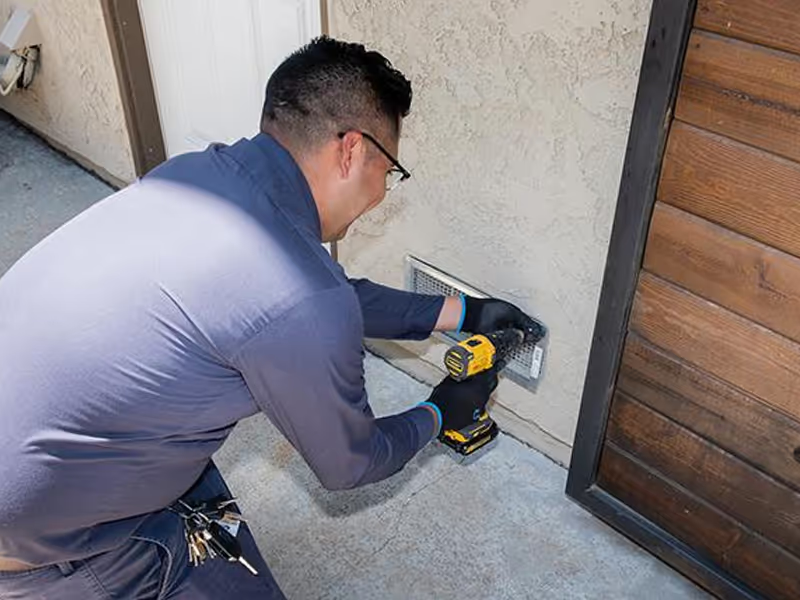
Windows in stucco homes typically have small weep holes at the bottom of the frame. These are there to let water drain out, but they also give ants a direct route into the house. We find ant trails coming in through window weep holes all the time, especially in kitchens and bathrooms where there's moisture on the other side.
Older aluminum-frame windows — still common in many homes across Bellflower and parts of Orange County — tend to have wider gaps around the frame where caulking has cracked or pulled away over the years. That's another easy way in.
Plumbing and Utility Penetrations
Every home has pipes, electrical conduit, and AC lines that pass through the exterior walls. And almost every one of those penetrations has at least a small gap around it. Under kitchen sinks, behind washing machines, around outdoor hose bibs — these are spots ants use regularly.
AC condensation lines are another one we check. Air conditioning units run frequently in Southern California, and the drain line often exits near the foundation. The area around that line stays damp, which attracts ants. Then they follow the line right back through the wall.
Garage Doors and Attached Garages
Garage door seals rarely sit perfectly flush, especially on older homes or uneven driveways. Ants walk right underneath. Once inside the garage, they have access to the interior walls, plumbing connections, and the door to the house.
We see this a lot in homes where the garage is used for storage. Cardboard boxes, pet food, recycling bins — all things that attract ants. And once they're established in the garage, the jump to the kitchen is short.
How Landscaping and Irrigation Push Ants Toward Your Walls
One pattern we see across Southern California properties is landscaping that unintentionally creates a direct bridge between ant colonies and the house.
When shrubs, ground cover, or tree branches touch the exterior walls, ants don't even have to cross open ground. They travel straight from the planting bed into the structure. Dense ground cover, like ivy or star jasmine — popular in many Orange County neighborhoods — provides ants with a sheltered highway to the foundation.
Mulch beds pushed up against the house are another issue. Mulch holds moisture, and ants nest underneath it. If that mulch is sitting right against the stucco or foundation, there's almost no barrier between the colony and the interior of the home.
And then there's irrigation overspray. Sprinkler heads that hit the foundation or soak the soil right along the house keep that area damp day after day. That kind of consistent moisture is exactly what ants look for when choosing a nesting site. The closer that nest is to the house, the easier it is for them to find their way in.
If you're seeing ant activity inside and you have landscaping right up against the structure, that connection is worth looking into. Our team can help identify where ants are actually nesting and how they're using the landscaping around your home to get indoors.
Why the Ants You See Aren't Where the Problem Starts
Here's something that surprises most homeowners: the ants on your kitchen counter are usually just the foragers. The actual colony — the queen, the nest, the thousands of workers you don't see — is almost always outside.
That means the real problem isn't inside your house. It's the path between the colony and your home, and the entry point they're using to get in.
This is why spraying the ants you see usually doesn't do much good. The colony is still out there, and those foragers will keep coming through the same gaps. If the entry points aren't addressed, the trail picks back up within a few days. There's a reason ant problems tend to come back — and it almost always comes down to a gap that wasn’t sealed or a nest that wasn’t treated.
What Admiral Pest Control Looks for During an Inspection
When we come out to a home with ant activity, the first thing we do is trace the trail. We follow the ants backward — from where you're seeing them inside, along the path, through the wall or crack, and back to the entry point on the exterior.
From there, we work outward to locate the colony itself. A lot of times, the nest is within a few feet of the foundation — under a slab, beneath mulch, or in the soil along a walkway.
Once we've identified the species, the entry points, and the nesting areas, we focus treatment where it actually matters. That typically means targeted exterior treatments along the foundation and around key entry points, with interior treatment only where it's needed.
Admiral Pest Control has been treating homes across Los Angeles County and Orange County since 1947. That experience makes it easier to spot the construction gaps and moisture conditions that commonly allow ants into Southern California homes.
If you're seeing ants inside and can't figure out where they're coming from, reach out for an inspection. We'll track down the entry points and put a plan together to keep them out.
Year-Round Pest Control That Covers Ants
One inspection and treatment can solve an active problem. But in Southern California, ants are active year-round. That means the conditions that brought them in once can bring them in again.
Admiral's residential pest control plans include coverage for ants and other common household pests, such as cockroaches, spiders, earwigs, and more. Treatments are scheduled throughout the year, and if you see any pest activity between visits, we come back out at no extra charge.
Each service includes exterior treatments focused on the foundation, entry points, and perimeter of the home — the exact areas where insects gain access. Interior treatment is included as needed.
Southern California Ant Entry Point FAQs
Can ants damage a home's structure?
Most ants in Southern California are nuisance pests and won't damage a home. Carpenter ants are the exception because they tunnel through moisture-damaged wood to create nesting areas.
Why are ants common in stucco homes?
Stucco homes often have small gaps around weep screeds, windows, and utility lines that ants use to enter the home. These openings are common in Southern California construction.
Can ants enter through concrete cracks?
Yes. Even small foundation cracks or expansion joints can give ants enough space to enter a home, especially around slab foundations.
Is it normal to see ants inside after it rains?
Heavy rain can flood outdoor ant nests and push colonies toward drier areas, including homes. This is especially common when the soil around the foundation stays damp.
Keep Ants Out for Good
If you've found ants inside your home, Admiral Pest Control can help identify where they're getting in and treat the problem at the source.
Our team has been serving Southern California homes since 1947, and in many cases, we can schedule service the same day you call.
Contact Admiral Pest Control to request your free estimate.